
1. Decide what the next home has to do for you
Start with how you want to live, not square footage. Write down:
- Must-haves: a main-floor bedroom and laundry, no stairs at the entry, an attached garage, room for the grandkids to visit, a yard or no yard.
- Where you need to be close to: family, your church, your doctors, the cabin, the airport.
- What you're done doing: mowing, shoveling, roofs, steps.
- A monthly budget that includes association fees, taxes and insurance, not just the price.
That list tells you whether you're looking for a one-level house, a townhome, a condo, a 55+ community or a senior co-op. See one-level living and 55+ communities.
2. Find out what your home is worth today
Your equity is the down payment, or the whole purchase price, of your next home. A free, no-obligation home value from a local agent who walks through the house beats an online estimate, because it accounts for updates, condition and what's selling on your street right now. Request your home's value, or look up your city in our monthly market reports.
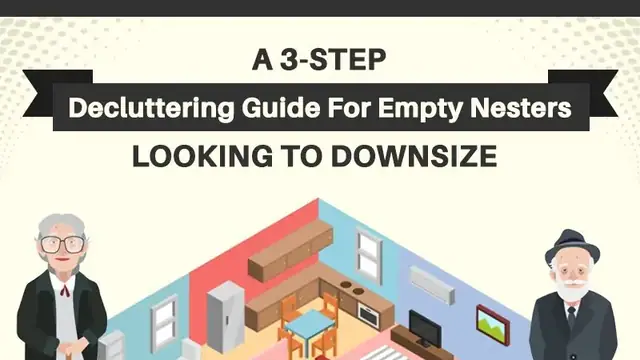
3. Sort early, a room at a time
Decades of belongings is the hardest part for most people, so start before the house is listed. Sort each room into keep, give to family, sell or donate, and toss. Measure your next home's rooms before deciding which furniture comes along. Offer family the things they want first and set a date for them to pick it up. Senior move managers, estate sale companies and junk-removal crews can do much of the heavy lifting; ask us for names we trust.
4. Line up the money for the next home
Decide whether you'll pay cash from your sale, keep a smaller mortgage, or need to buy before your current home sells. If you'll borrow, talk to a lender before you shop; a retirement-income mortgage works differently than one based on a paycheck. See buy before you sell and paying cash for your next home.
5. Get the house ready to sell, without overdoing it
You rarely need to remodel. The work that pays off is usually cleaning, decluttering, fresh paint in dated colors, fixing what an inspector will flag, and good photos. If repairs or a big cleanout feel like too much, a cash offer or an as-is sale trades some price for speed and simplicity. See selling a home you've owned for decades.
6. Time the sale and the purchase
The goal is one move. The usual ways to get there: buy first with a contingency or bridge financing, sell first and negotiate extra time after closing to stay in the home, or move into a short-term rental between homes. Your agent writes these timing terms into the contracts.
7. Moving day and after
Book movers early (spring and summer fill fast in Minnesota), forward your mail, update your address with Social Security, Medicare and your banks, and transfer utilities. Keep your closing papers: you'll want the settlement statement at tax time.