The Average First-Time Buyer Is Now 40: The Twin Cities Data

When your parents bought their first home, how old were they? 26? 28? In 2025, the National Association of Realtors reported that the average age of a first-time home buyer hit a record 40 years old. These are people who did everything right: went to school, got jobs and saved. Here’s why it happened, and what you can actually do about it in the Twin Cities.
Figures are as of my video above (April 2026).
The math on a median-priced home
In January 2026, the Twin Cities metro median price was $375,000.
- A 20% down payment is $75,000 in cash.
- Closing costs add roughly $8,000 to $15,000.
- That’s close to $90,000 to get in the door, when the metro’s median household income is around $80,000 a year before taxes, and you’re also paying rent, student loans, a car payment and groceries.
At rates around 6% to 6.5%, that $375,000 home with 20% down is roughly $2,000 a month in principal and interest. Add property taxes and insurance, and it’s about $2,600 to $2,700 a month.
(You don’t always need 20% down. Many loans allow 3% to 5%, with mortgage insurance. Try our affordability calculator to see your own numbers.)
NAR also identified the Twin Cities as the most rate-sensitive housing market in the country: a one-point drop in mortgage rates, from 6% to 5%, would let about 81,000 more Twin Cities households qualify to buy.
How we got here: three forces
1. The great lockup. Millions of owners locked in rates around 3% in 2020 and 2021. Moving to a 6% loan could nearly double the payment on a similar home, so they stay put. In January 2026, Twin Cities new listings were down 10.8% from a year earlier. Less supply plus the same demand means higher prices.
2. Investors. From 2020 to 2023, large investors bought single-family homes on a scale never seen before, often starter homes, and turned them into rentals. Entry-level homes under $300,000 have become scarce.
3. The cost of building. Labor, materials, land, permits and regulations have all gotten more expensive. Builders can’t profitably build a starter home under $300,000, so they build higher-priced homes instead. The starter home has effectively been discontinued.
Renting isn’t failure
It can feel like a race where the finish line keeps moving. You save 5% down, prices rise, and you start over. You get pre-approved and lose to cash offers again and again. Your parents, who bought for $140,000 in 1994, tell you to save more. Renting isn’t failure, and it’s not your fault, but the frustration is real.
What’s changing in 2026
- The frenzy is over. In January 2026, homes averaged 22 days to go under contract. Pending sales were down nearly 13%, and inventory had grown.
- Buyers have leverage again. You can negotiate, ask the seller to buy down your rate, cover closing costs or make repairs, and keep your inspection.
- Help is available. Minnesota Housing offers down payment assistance (some programs up to about $17,000 when I made the video), plus first-generation and income-based programs.
- The Twin Cities are still relatively affordable. Compare a median of $375,000 here with about $550,000 in Denver, $450,000 in Austin or $650,000 in Seattle, alongside a strong job market and Fortune 500 headquarters. This market isn’t collapsing; it’s recalibrating.
Four things to do now
- Get educated before you get pre-approved. Know your total monthly cost: mortgage, property taxes, insurance, maintenance and any HOA dues.
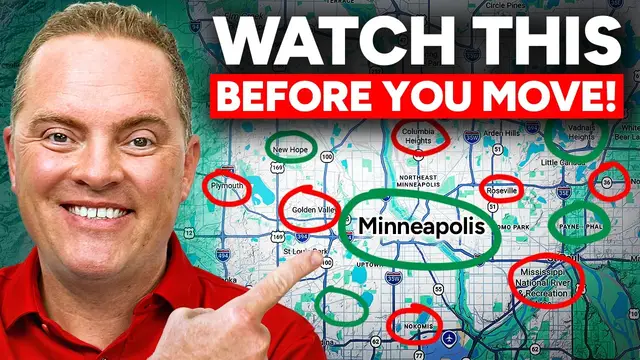
- Look at first-ring suburbs with fresh eyes. Northeast Minneapolis, Longfellow and Mac-Groveland are great, but competitive. Look at Columbia Heights, Brooklyn Center, Robbinsdale, South St. Paul and Crystal: real character, reasonable prices and improving amenities.
- Check Minnesota Housing programs at mnhousing.gov before you assume you can’t afford to buy. Look at Start Up for first-time buyers, Step Up for current owners, and down payment assistance.
- Negotiate, especially on homes that have sat more than a couple of weeks. Ask for a rate buydown or closing cost help, and always get an inspection.
Not ready yet? That’s okay. Be intentional about saving, because the sooner you start building equity, the longer it has to grow.
The bigger picture
This is a supply problem, and it needs more homes. Cities have to make it easier, faster and cheaper to build. Minneapolis’s 2040 plan, which allowed duplexes and triplexes where only single-family homes were allowed before, was a step in that direction, but it takes time.
If you’re 40 and buying your first home this year, congratulations: you navigated one of the hardest markets in modern history. If you’re 32 and it still feels out of reach, keep learning and keep saving. The window isn’t closed. Book a free, no-pressure call with our team.