10 Things Everyone Gets Wrong About Living in Minnesota

Every week someone tells me they’ve searched for months and can’t find anything in their budget in Minnesota. Almost every time, they’ve only been looking in one place: Minneapolis and Saint Paul. After more than 25 years in this market, I hear the same 10 assumptions over and over. Here they are, with the real numbers.
Figures are as of my video above (October 2026).
1. “Minnesota is basically the Twin Cities”
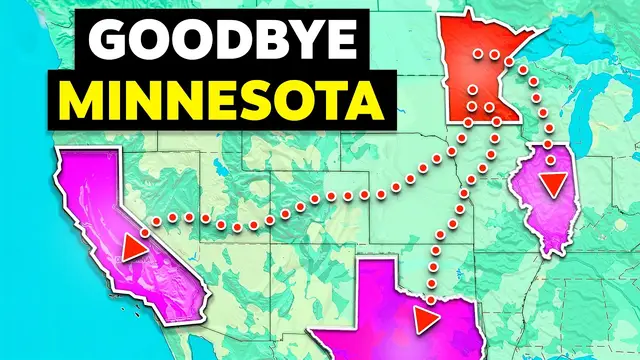
Minnesota is about 400 miles north to south and 350 east to west, the 12th largest state by area. Driving from Iowa to Canada can take six hours or more. There are 87 counties, and only seven make up the core Twin Cities metro. I live about 30 minutes south of downtown, and five minutes from my house I can walk past cows on a dirt road.
2. “It’s all flat farmland”
Drop someone on the North Shore near Grand Marais and they’d guess Maine or the Oregon coast: rocky shores, pine trees and water to the horizon. Eagle Mountain, the state’s highest point at just over 2,300 feet, is surprisingly close to the lowest, Lake Superior’s shoreline at about 600 feet. The northeast has rocky highlands and forest, the southeast has river valleys and bluffs, and the west and south have open plains.
3. “It’s only 10,000 lakes”
The license plate says 10,000. The state’s count of lakes over 10 acres is 11,842. Use the 2.5-acre minimum many states use and it’s nearly 22,000. Most are outside the metro, in central and northern Minnesota. The Boundary Waters alone cover more than a million acres, with over 1,100 lakes and more than 1,200 miles of canoe routes. You don’t need a cabin to enjoy it; public parks and boat launches make the water easy to reach.
4. “My budget buys the same thing everywhere”
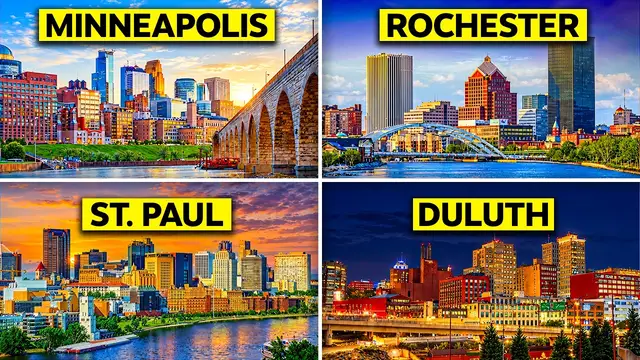
- Statewide median: about $370,000
- Twin Cities metro: just over $400,000
- Minneapolis: mid to upper $300,000s
- Saint Paul, 15 minutes away with the same job market: closer to $300,000
- Rochester: mid-$300,000s
- Duluth: high $200,000s to low $300,000s
- About 90 miles south of the Twin Cities: upper $100,000s to low $200,000s
Go two hours out in almost any direction and you can buy a lot more home, as long as it’s not on the water. Lakefront plays by its own rules everywhere.
5. “The income tax makes moving here a bad decision”
Some of it is true. Minnesota’s four brackets for 2026 run from 5.35% to 9.85%, and that top rate is high; no sugarcoating it. Most clothing, most groceries and prescription drugs aren’t subject to sales tax, but that doesn’t cancel out the income tax for most people.
Still, taxes are only part of the cost. Home prices here are below the national median, the overall cost of living is close to average, and there are many Fortune 500 employers. Coming from a high-cost state, it may make more sense than you think; from Texas or Florida, with no income tax, it may not. Run your numbers with your accountant.
6. “There’s nothing to show for those taxes”
MSP was ranked the best mega airport in North America for the third year in a row, handled about 36 million passengers last year, and serves 35 international destinations. Infrastructure like that isn’t free; you pay for it somewhere.
7. “Property taxes will eat whatever I save on the house”
Minnesota’s property tax rate is close to the national average, and many new owners leave money on the table. Homestead classification lowers your home’s taxable value, but you have to file it with your county yourself, by December 31 of the year you move in. Homestead status also opens the door to two refunds: one based on household income, and a special refund of up to $1,000, with no income limit, if your net property tax rises more than 12% and at least $100 in a year. Neither shows up automatically. More in 4 Minnesota housing law changes.
8. “There are no real jobs outside the metro”
Rochester has a roughly $5 billion construction project around Mayo Clinic: five new buildings totaling about 2.4 million square feet, running through 2030. St. Cloud, Mankato, Moorhead and Duluth have their own regional economies, with health care, manufacturing and logistics alongside agriculture. Rule out greater Minnesota and you may miss some of the state’s most affordable housing and some fast job growth.
9. “Spring is when you buy”
Spring brings more listings and more buyers. Late fall and winter bring fewer listings but often more room to negotiate. A winter showing tells you things spring can’t: drafts, how well the heat works and how the driveway handles snow. Just remember snow can hide the yard and the roof, so read the seller’s disclosure carefully.
10. “The Mississippi is a southern river”
It starts here, at Lake Itasca, a few hours north of Minneapolis, as a stream you can cross on stepping stones. It runs more than 650 miles through Minnesota, through Minneapolis and Saint Paul, and about 2,350 miles in all. The National Park Service oversees a 72-mile river corridor through the metro covering about 54,000 acres. River shipping is a big reason the Twin Cities grew where they did.
Don’t limit your search too early
Most of these assumptions come from picturing one version of Minnesota. Tell us your budget and we’ll help you find areas that fit.