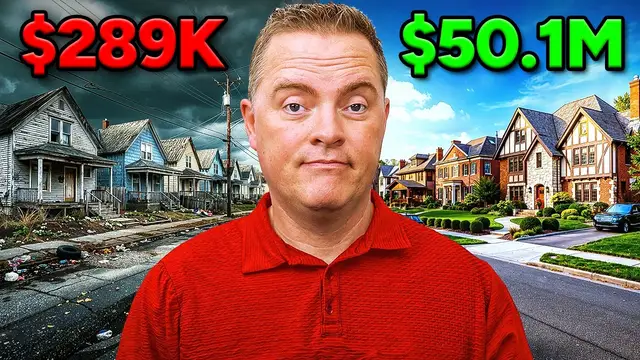
The Minneapolis Housing Market Has Split in Two

Minneapolis home prices were up about 6%, and closed sales had dropped almost 16%. Both were true at the same time, and that’s the problem. The market has split into two separate realities, and which side you’re on changes your whole plan.
These numbers are from my video above (July 2026). For the latest, see our market page.
What the averages hide
In Minneapolis, prices were up about 6% from a year earlier, with a median in the mid-$300,000s and homes selling in about 30 days. That sounds healthy. But closed sales in Minneapolis fell 15.7% year over year in early 2026, pending sales had been falling for months, and the metro median slipped about 2% in April.
When prices hold steady while sales fall, one part of the market is propping up the other. Here, competitive suburbs are holding up the average while the city core slows down, and condos are a big part of that.
Side one: the suburbs are still competitive
In Edina, Eden Prairie, Minnetonka, Chanhassen, Woodbury, Maple Grove and Lakeville, correctly priced homes were still moving fast:
- Eden Prairie homes were getting about six offers, some seven or more, and selling in under 30 days.
- Chanhassen homes were selling in about 17 days.
- Edina is the higher-priced option, with averages in the high $600,000s. Eden Prairie can offer a similar lifestyle for noticeably less, and that gap matters more than buyers expect.
Why: the mortgage rate lock-in. Many owners have rates at 3% or lower and don’t want to give them up, so inventory stays low while buyers are still there. Remote and hybrid work also means people don’t need to be downtown every day; they want more space and an easier life.
Side two: the city core has slowed way down
In Loring Park, the North Loop, the Mill District, Elliot Park, Downtown West and Marcy-Holmes, homes were taking about four months to sell in early 2026, closed sales fell almost 18%, and sellers were accepting offers about 5.7% below asking on average. It’s one of the softest downtown markets we’ve seen in years.
The biggest reason is HOA fees. Downtown dues can start under $300 a month and reach $1,000 or more (I’ve helped buyers into buildings with dues near $5,000). Take a condo in the low to mid-$300,000s, add $500 to $600 in monthly dues, at a mortgage rate around 6.5%, and the payment can match or beat a suburban house.
Zoning is another factor. Minneapolis was the first major U.S. city to end single-family-only zoning; the Minneapolis 2040 plan allows duplexes and triplexes on former single-family lots. For some buyers that’s an opportunity, and for others it adds uncertainty.
If you’re buying in the suburbs
- Be ready to move fast. Get fully underwritten for your pre-approval, not just pre-qualified, and know the area you want.
- Don’t expect a big discount on a well-priced, well-kept suburban home.
- Compare suburbs carefully. Similar lifestyles can come at very different prices.
If you’re buying in the city core
You have real leverage for the first time in years. On homes that have sat more than 30 days, you can ask for a lower price, closing cost help or a rate buydown, and you can keep your inspection.
For condos, review the HOA’s finances before you write an offer. Look at:
- Reserves, the money the building has saved for big repairs
- Insurance costs
- Past special assessments (extra bills owners pay when the building needs work)
Low reserves plus an older building is a risky combination; that’s often how large special assessments show up later.
If you’re selling in the suburbs
- Price it right from day one. The market rewards the right price fast and punishes overpricing fast. Don’t use 2022 as your model.
- Condition still matters. Buyers care what they’re buying.
- Fast activity means the price is working. If offers show up in the first couple of days, don’t second-guess it.
If you’re selling in the city core
- Your first 14 days matter most. That’s when serious buyers are watching. After that, it gets noticeably harder.
- Price below your competition, fix the obvious issues and be ready to negotiate.
- Share the building’s financials early and make it easy for buyers to say yes.
Not sure which side your home is on? See what your home is worth, try the seller net proceeds calculator, or talk with our team.