What Nobody Tells You About Living in Minnesota

You’ve heard about the cold, the lakes and Minnesota nice. But none of that tells you what a normal Tuesday feels like here. I grew up in Lakeville (my parents still live in the same house after more than 35 years), built my career and family here, and have spent 25 years in Twin Cities real estate. Here’s what catches people off guard their first year.
Winter: it’s the length, not just the cold
Yes, it gets cold. Highs are often in the low to mid-20s and nights dip into single digits, and that’s air temperature, not wind chill. Sometimes it drops below zero. After a winter or two, you learn to dress for it: a real coat, real boots, layers.
What really gets people is the length. Winter can run from November through March, with snow on the ground most of that time. And it’s dark: from November through February, you can leave for work and come home in the dark. Some people use light therapy, and getting outside during the day helps. Even lifelong Minnesotans have days when they want winter over. (There’s a reason one of our hometown airlines is named Sun Country.)
How people do winter well: they don’t spend five months waiting for spring. You’ll find outdoor rinks all over the Twin Cities, plus cross-country skiing, snowshoeing, pond hockey and ice fishing. Cities clear trails every morning, and snow gets cleared fast. Plans don’t get canceled because of snow.
Jobs, cost of living and travel
Work brings most people here. Minnesota has a lot of major companies for its size: UnitedHealth Group, Target, Best Buy, U.S. Bancorp, 3M and General Mills are headquartered here, and Cargill, the largest privately owned company in the world, is in Wayzata. Health care, finance, retail and food: you’re not depending on one industry.
Cost of living in the Twin Cities runs below the national average, and home prices are lower than in most coastal states. The same income goes further.
Travel is easy. MSP has been ranked the #1 mega airport in North America three of the last four years and is Delta’s second-largest hub. Because we’re centrally located, most nonstop flights in the U.S. are about three hours or less.
Getting outside is part of daily life. Minneapolis ranked the #2 large city in the country for biking two years in a row, thanks to trails like the Chain of Lakes and the Grand Rounds, and many Minneapolis and Saint Paul neighborhoods are very walkable.
The quirks
- Liquor rules. Sunday liquor sales were banned until 2017. Liquor stores can now sell from 11 a.m. to 6 p.m. on Sundays, and from 8 a.m. to 10 p.m. the rest of the week, and they’re closed Thanksgiving and Christmas. Grocery stores can only sell low-alcohol beer, so for wine, liquor and regular beer you need a liquor store, sometimes attached to the grocery store with its own entrance (Costco is a good example).
- The sirens. At 1 p.m. on the first Wednesday of every month, outdoor warning sirens (most people call them tornado sirens) are tested across most of the state. If nobody warned you, it’s alarming; locals don’t even look up. Each spring there’s also a statewide tornado drill during Severe Weather Awareness Week, with sirens in the afternoon and evening.
- Minnesota nice. People are polite and genuinely helpful, but they can be reserved. Someone can be completely friendly without becoming your close friend right away, and that takes some getting used to.
- The language. It’s “duck, duck, gray duck,” not “duck, duck, goose.” It’s pop, not soda. It’s “you guys.” And “yeah, no” means no. You’ll catch on.
Choosing where to live
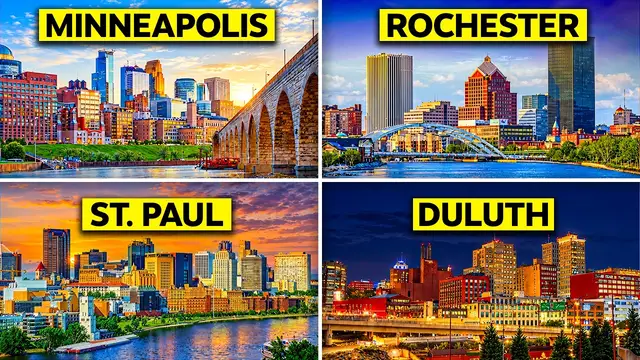
Before you look at a single home, think about the area: your commute, and what you do every week. Life changes a lot depending on where you land.
- West metro: Wayzata, Edina, Minnetonka and Eden Prairie come up constantly.
- Growing fast: Woodbury and Lakeville, with more new construction and space.
- City life: the North Loop, or Linden Hills for city living with green space out the front door.
- One to watch: St. Louis Park, with the Green Line Extension on track for 2027.
The market when I made the video (September 2026): about 11,600 homes for sale in the Twin Cities and a 7-year high statewide, so buyers have breathing room. But sellers were still getting about 99% of list price, and homes took about 40 days to sell. The state median was around $375,000 and the Twin Cities around $408,000, with rates near 6.7%.
What a Minnesota winter teaches you to want in a home
- An attached garage, and even better, a heated one
- A mudroom for wet boots and snowy coats
- Being near a main road, and how well your street gets plowed
None of that seems important until you’ve lived through five months of winter.
Is Minnesota right for you?
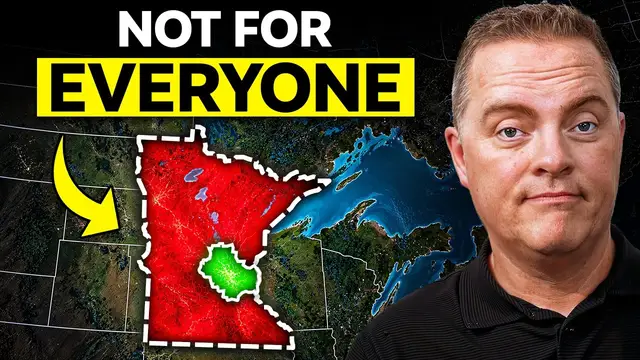
Minnesota winters aren’t for everybody, and that’s okay. For a lot of people, it’s worth it. If you’re thinking about moving to the Twin Cities, you need more than listings emailed to you. You need someone who can compare areas and explain daily life here. Tell us what you’re looking for.